D2C Fashion and Accessories
Overview
A newly launched men’s leather accessories brand partnered with us to build its paid acquisition engine from the ground up. The brand entered a crowded category dominated by legacy players and look alike D2C brands, where most communication sounded interchangeable and product differentiation was rarely felt.
This launch was not about noise or scale. It was about meaningful entry. The brand needed to communicate why it existed, how it was different, and why a modern customer should care.
Launch Context
The brand was built around a clear insight. Men are not buying accessories for fashion. They are buying them for fit, function, and finesse. Most wallets are bulky, belts fail over time, and bags are designed more for display than daily use.
The challenge was not awareness. It was relevance. How does a new brand enter without shouting, without overclaiming, and without relying on legacy cues like luxury language or heritage narratives.
From a performance standpoint, there was no historical data, no creative benchmarks, and no proven funnel. Everything had to be learned quickly and responsibly.
Objective
The objective was to validate paid acquisition for a new brand, identify creative formats that build trust early, and achieve stable performance without compromising the brand’s calm and considered positioning.
Strategy and Execution
We treated this as a positioning led performance launch rather than a conventional media rollout.
The first major decision was creative direction. Instead of polished studio visuals, we prioritised creator led and usage focused content. The products were shown being handled, worn, opened, adjusted, and lived with. The intent was to demonstrate subtle utility rather than visual perfection.
These creator centric formats consistently outperformed studio assets on both click through rate and conversion. The insight was clear. Authenticity created confidence. Polish created distance.
Creative testing was aggressive but disciplined. Multiple creators, angles, and hooks were tested simultaneously, with a strong focus on functional benefits such as fit, flexibility, slim profiles, and everyday usability. Underperforming creatives were cut quickly, while winning formats were refined and reused across audiences.
Alongside creative testing, we worked closely on the conversion layer. Product detail pages were structured to reduce friction and answer real buying questions. Visual hierarchy focused on use cases, fit, and capacity. Trust cues such as delivery timelines, return clarity, and packaging were made prominent to support first time buyers.
To support gifting behaviour, we introduced a structured gifting upsell system. Customers were primed on the product page with clear gifting cues, then offered category specific gift boxes at the cart stage. This helped elevate the brand’s gifting proposition without pushing discounts or cheapening the experience.
Google Search was layered in once creative direction on Meta stabilised, allowing the brand to capture high intent demand while Meta continued to drive discovery and education.
Channels and Funnel
Channels Managed
Meta Ads
Google Search
Funnel Focus
Creative led acquisition
Launch phase conversion optimisation
Gifting and upsell support
Results
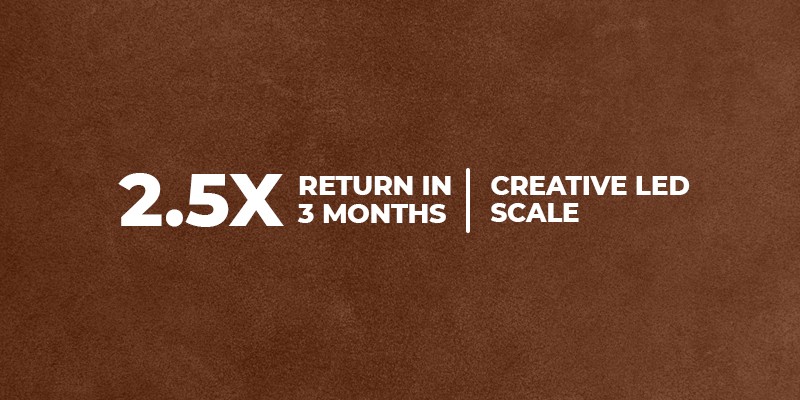
Over a three month launch window, with an average monthly ad spend of approximately ₹2 lakhs, the brand achieved a 2.5x return.
More importantly, the launch delivered clarity. Creator led content consistently outperformed studio assets, utility driven messaging resonated strongly with the target audience, and gifting upsells contributed positively to order value without increasing friction.
The brand moved from zero to stable performance with a clear roadmap for scale.
